
April: Best Month in Five Years for S&P
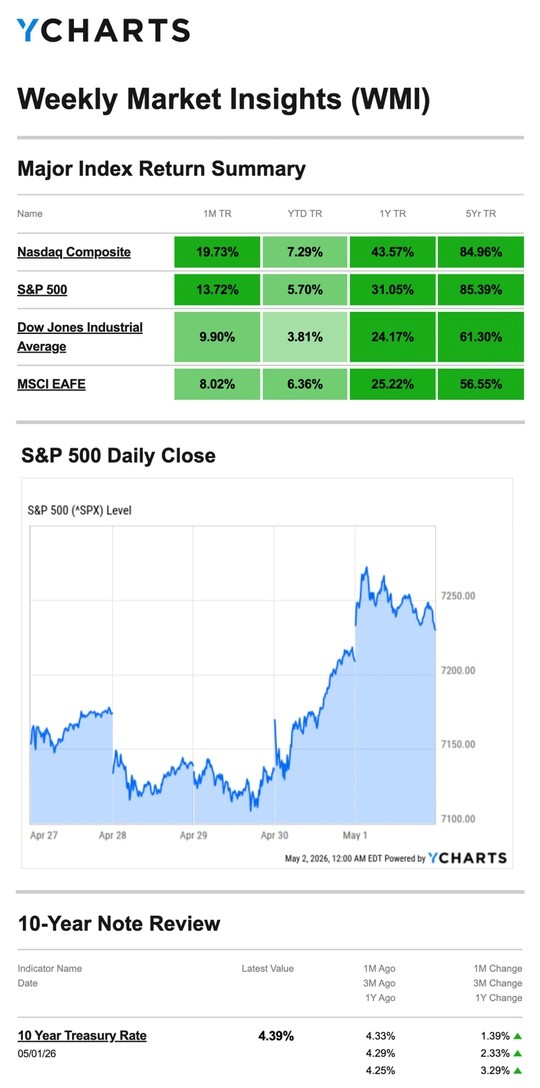
Stocks advanced last week as investors moved past stalled progress in Middle East peace talks and refocused on corporate earnings. The Standard & Poor’s 500 Index rose 0.91 percent, while the Nasdaq Composite Index climbed 1.12 percent. The Dow Jones Industrial Average moved up 0.55 percent. The MSCI EAFE Index, which tracks developed overseas stock markets, added 0.58 percent.
Markets were under pressure early in the week as investors focused on stalled peace talks and rising oil prices. But midweek, momentum shifted. First, the Fed announced it was holding interest rates steady, as expected, but there was some dissent over the decision. Then investors’ attention focused on Wednesday’s closing bell, when several big-name companies reported Q1 results.
Investors mostly liked what they heard, and stock prices rose, ending April on a high note. The Dow led the broad market rally while the S&P 500 and Nasdaq each logged their best monthly performances in 5 years.
Stocks rose again on Friday as oil prices fell. Investors applauded Q1 results from another high-profile megacap tech company, which helped the S&P notch another all-time intraday high.
Fed News
The Federal Reserve voted 8-4 to keep interest rates steady at the April meeting, leaving the Federal Funds Rate at a 3.5 to 3.75 percent target range. Market observers were quick to point out that the 8-4 decision was the Federal Open Market Committee’s most divided vote since 1992.
At the last FOMC press conference of his eight-year tenure, Fed Chair Powell announced he would stay on as a Fed governor after his term as Chair expires on May 15. Earlier that day, the Senate Banking Committee confirmed Kevin Warsh as the next Fed Chair, setting up a final confirmation vote in the Senate.
It’s Earnings Season
Over the next few weeks, investors will hear about the Q1 business climate from roughly 90 percent of Standard & Poor’s 500 companies. You will hear about the economy from companies operating on the front lines.
For example, expect tech companies to provide updates on AI, retailers to provide updates on consumer buying habits and energy companies to provide updates on oil prices. So while it’s great to hear from the Bureau of Labor Statistics and other government agencies about economic measures like consumer inflation and the state of the job market, companies will tell shareholders how they are managing costs, the state of the consumer and how they are working through geopolitical issues.
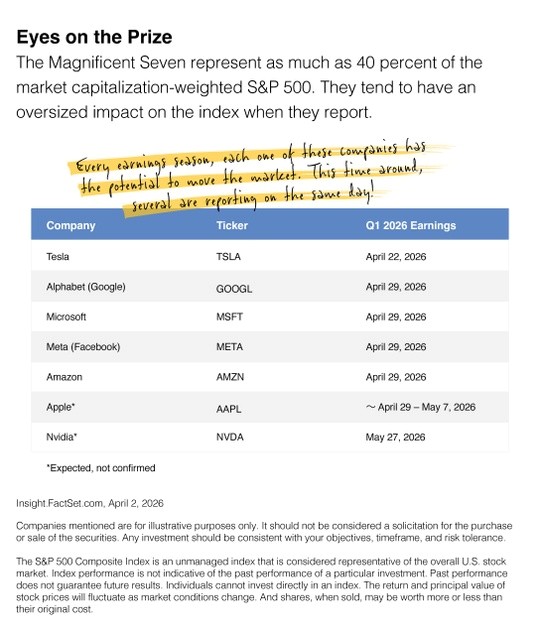 Every quarter, some companies outperform, while others report challenges. But all companies will talk about the business climate, so try to focus beyond the numbers and listen for clues about what may lie ahead.
Source(s):
CNBC.com, May 1, 2026
WSJ.com, May 1, 2026
Investing.com, May 1, 2026
YCharts.com, May 2, 2026. Weekly performance is measured from Monday, April 27, to Friday, May 1. TR = total return for the index, which includes any dividends as well as any other cash distributions during the period. Treasury note yield is expressed in basis points.